
That sinking feeling when a warning light pops up on your dash or your car feels “off”? Felt familiar? Yup, it is something every driver knows.
You want to fix it before it gets worse. But you’re not sure where to start. You wonder if it’s a serious problem or just something you can sort yourself. This simple car diagnostic guide helps you understand your car’s signals so you can take action early.
At Schon Automotive, we see Perth drivers confused by lights, noises, and leaks every day. You don’t need to be a mechanic to sense when something is wrong. With a bit of know-how, you can detect warning signs, run a DIY engine diagnosis, and decide what to do next.
Let’s give you a practical & step-by-step way to look under the bonnet with confidence.
How Timely Engine Diagnosis Makes a Difference?
Your car’s engine and computer systems constantly talk to you. Yup, they talk through lights, sounds, and behavior. When you catch a problem early, you avoid bigger repairs. E.g., early engine diagnosis prevents damage caused by overheating, misfires, or poor fuel delivery.
Modern engines use sensors and an onboard computer to monitor performance. If these systems detect a fault, they store a code and light up the dashboard. Knowing how to read these signs can also save you a lot of money and stress.
It also helps when you talk to the Car Service Perth workshop and saves you from scams.
Spotting Early Warning Signs
So, first of all, your car sends you some signals. You need to stay connected enough with your vehicle to understand when something is off. Let’s find out how to do that.
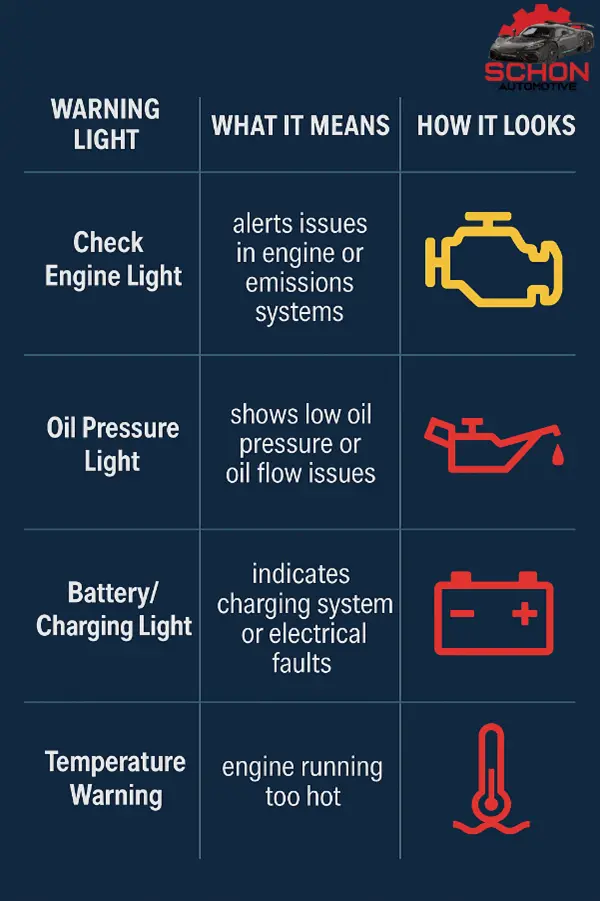
Read Dashboard Lights: Your First Clue
Dashboard icons aren’t random. They are there to help you notice trouble early. The most common and serious one of them is the following.
- A steady engine light means a minor issue that needs checking soon.
- A flashing warning signals a more serious fault that needs immediate attention.
- A flashing light means a misfire that can harm the engine.
- A steady amber light is a loose cap or sensor fault, still important, but less urgent.
Listening for Weird Sounds
Cars rarely make new noises for no reason. Odd sounds point to specific issues. So, occasionally turn the music off and remove the headphones to listen to your car. Problematic sounds include:
- Clunks or knocks at idle or speed mean internal engine wear.
- Hissing sounds may be vacuum or coolant leaks.
- Squealing belts or pulleys need checking soon.
Matching sounds to symptoms helps narrow down the issue before you run scans. Once you’ve noticed (heard, seen, or even smelled) something unusual, it is time for a visual check.
Quick DIY Visual Inspection: How Does It Keep the Issues at Bay?
The easiest checks are ones you can do with just your eyes and a torch. And yes, you don’t have to be a mechanic for that.
Check Fluid Levels and Condition
Fluid checks can also help you a lot in engine diagnosis, Perth.
| Fluid | What It Means |
| Engine oil | Low or dirty oil can cause misfires and overheating. |
| Coolant | Low coolant can lead to overheating. |
| Brake fluid | Low levels affect braking performance. |
| Transmission fluid | A low or burnt smell means trouble. |
Drain spots under your car tell a story too. Oil leaves dark brown or black marks. Coolant is bright green, pink, or orange. Fixing leaks early can prevent major repairs later.
Inspect for Leaks
Leaks happen at the following common points:
- Valve cover gasket
- Oil sump plug
- Hoses and seals
Any drip under the engine area needs a closer look. Engine oil leak repair should be done before the oil level gets dangerously low.
Look Under the Bonnet
Check belts for cracks. Look at wiring and connectors. Loose plugs or corroded terminals can trigger error codes even if nothing major has failed.
Running a Basic Self-Scan (Car Diagnostic Test)
So, let’s level up and tell you about a bit of advanced knowledge.
Using an OBD-II Scanner
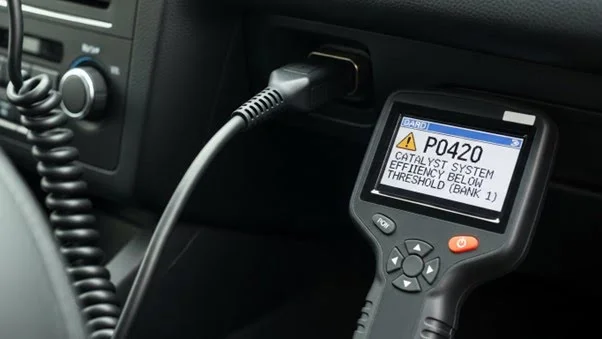
Nearly every car made in the last 20+ years has an OBD-II port. This is a standard interface that lets you read fault codes from your car’s brain, the ECU. Plug an OBD-II scanner into its port under the dashboard. It will show diagnostic codes stored in your car.
These codes are numbered as P0300, P0171, or P0420. Each one tells a specific system area where a fault is detected. It helps you understand what part of the car needs attention. You can use a basic handheld tool or a Bluetooth scanner with an app on your phone.
Just read the codes and note them down.
Understanding Trouble Codes
Here’s a simple list of common codes and what they mean:
| Code | General Meaning | Action |
| P0300 | Random misfire | Likely pro help |
| P0171 | Engine running lean | DIY check + pro |
| P0420 | Catalyst efficiency low | Pro needed |
| P0455 | EVAP leak large | DIY/Pro |
| P0113 | Intake temp sensor | DIY possible |
Remember that a code tells where the issue is, not what part must be replaced. Further testing is needed to confirm the issue and perform the repair. Most people make this mistake.
Common Mistakes When Self-Diagnosing
| Mistake | Why It’s a Problem |
| Expecting codes to spell out exact fixes. | They just point toward trouble areas. Further tests are needed. |
| Clearing codes too soon. | If you clear them before fixing anything, you lose valuable clues. |
| Ignoring live data. | Some problems show in real-time data before a fault code appears. |
Learning to read live data (like fuel trim or sensor values) gives deeper clues. but it requires more advanced tools and experience. So, at that point, we recommend an expert check.
When DIY Isn’t Enough?
Even with a good scan and basic checks, some issues need professional tools and skills.
Complex faults in the engine management system repair involve multiple sensors, wiring, and calibration. A pro workshop has advanced diagnostic machines that go beyond basic OBD readers to test individual circuits, modules, and sensors.
How a Professional Car Service Perth Shop Helps
So, what will experts do that you can’t? Let’s find out.
Deep Diagnostics
Workshops like Schon Automotive use specialized diagnostic scanners and software. These tools communicate deeply with your car’s systems, not just read stored codes. That helps find hidden issues faster and accurately. It saves time and reduces guesswork.
Expert Interpretation and Repairs
A code can mean many things. For example, a lean-fuel code doesn’t always mean a faulty sensor. It can be a vacuum leak, a weak injector, or an air intake issue being shown in code. Professionals inspect, test, and verify before repairing.
It avoids wasted spending on parts that weren’t the real cause.
Advanced Fixes and System Resets
After fixing a fault, workshops can reset systems correctly and check readiness monitors so your car runs as it should. It keeps things like emissions and engine timing optimal.
In Summary
Learning to self-diagnose car problems saves you from a lot of trouble.
You catch issues early and arrange timely repairs. You save time and understand your car better. But it does not replace professional expertise. Some faults are too complex or risky, and you can’t fix them without professional expertise or advanced tools.
You can use this car diagnostic guide to spot early signs, do quick checks, and decide what to do. But when things go really bad, contact trusted professionals near you.
Searching for the best mechanic in Perth for your engine diagnosis?
Book with Schon Automotive: Perth’s Trusted Diagnostic Specialists
Wondering what that warning light means? Or unsure how to interpret a fault code?
At Schon Automotive, our team combines advanced diagnostic tools with real skills. We listen first, check properly, and explain the results clearly. From engine fault finding to car engine diagnostic service, we help you get back on the road.
and drive with confidence.