
Is your car feeling bouncy, noisy, or uneven after hitting a pothole? These are classic signs of damaged car suspension. Driving on Perth’s roads with a bad suspension is risky. In fact, driving with broken suspension is like walking with a broken leg. It feels unbalanced and you can lose control.
Your suspension is designed to smooth bumps and keep wheels on the ground. When components like springs or shock absorbers crack or leak, ride quality and safety plummet.
This guide explains exactly when you should not drive, part by part, plus emergency tips and timelines. Keep reading to protect yourself and your car from more damage.
Can You Drive with a Damaged Suspension?
No, not safely. Any seriously broken suspension part can make your car unstable. A damaged suspension will feel unbalanced and unstable. You can lose control of your car or worse. Even if your car still moves, a failing spring, arm or shock absorber can throw off alignment and braking.
Simply, you shouldn’t drive any farther than needed to get help. Pull over at the first sign of trouble and have a mechanic inspect the damage.
Driving with a Damaged Car Suspension: Part-by-Part Guide
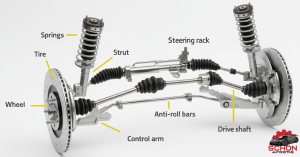
Below are common suspension components and whether you can (or should) limp along if each is broken:
Can I drive with a damaged shock absorber?
Yes, but very cautiously.
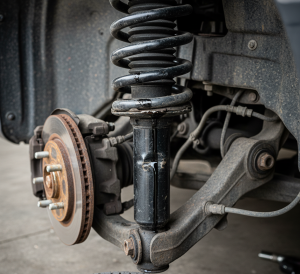
A broken shock absorber means your car will bounce excessively and roll or squat on uneven roads. You’ll feel every bump, and the car will be harder to control at speed. It won’t instantly ruin your car, but at highway speeds or during sudden maneuvers it becomes dangerous.
In Perth, avoid freeways or fast roads if you suspect a bad shock; drive slowly on smooth streets and get it fixed ASAP.
Can I drive with a damaged strut?
No.
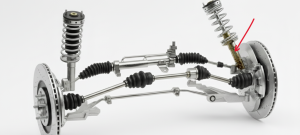
The strut (a coil spring combined with a shock) absorbs most bumps and is critical for steering and alignment. A broken strut makes the ride extremely rough and can destabilise your steering in an emergency. Continuing to drive will likely damage other suspension parts.
So, in Perth’s stop-and-go traffic or on winding roads, a failed strut can be especially dangerous. Have it replaced before you drive again.
Can I drive with damaged springs?

No.
A broken or collapsed spring causes the car to sag on one corner and makes handling unpredictable. You might squeak along, but the ride will be very rough. Bumps and potholes could send sharp edges into your tires or damage chassis components.
In Perth, even small potholes can worsen a cracked spring quickly. If the car body is resting on a tyre, stop immediately. Continuing drive could shred the tyre or cause a crash.
Can I drive with damaged control arms (suspension arms)?
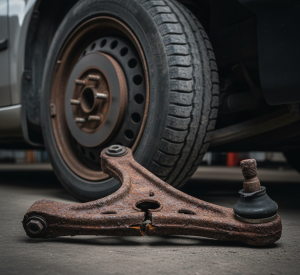
Yes – but take extra care.
Bent control arms typically cause alignment and handling issues, like pulling to one side or uneven tire wear. You can still drive, but steer gently and don’t go fast.
So, watch out for potholes which often bend arms. Plan to get the arms realigned or replaced soon; driving long-term with bent arms strains your steering and tyres.
Can I drive with a damaged anti-roll bar (sway bar)?

Yes, at low speeds and short distances.
A failed anti-roll bar lets the car body lean more in turns. It’s not an immediate crash hazard if all wheels stay grounded, but your car will feel “looser” on corners and emergency maneuvers.
Drive slower than normal and avoid sharp turns until fixed. On Perth’s roundabouts or hilly suburbs, take corners very gently without the stabilising effect of the anti-roll bar.
Can I drive with a flat tyre?
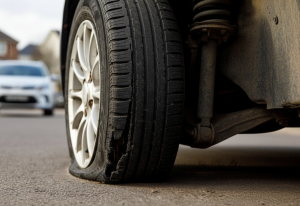
No.
A flat tyre is part of the suspension system. Driving on it can damage the wheel and make your car pull sharply to one side. Braking becomes much harder and uneven.
Replace a flat tyre immediately, either change to your spare or call for help. In Perth’s traffic, a flat tyre can be more dangerous than a broken spring because it directly affects braking and steering.
Can I drive with a damaged wheel?
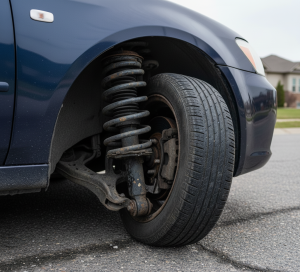
No.
A completely broken wheel (rim) means your car won’t move. Even a cracked wheel is extremely risky: the crack can snap completely, causing a crash. Don’t try to limp on a wheel with any structural damage.
In Perth’s high-speed roads, a sudden wheel failure can be catastrophic. Tow the car and replace the wheel before driving.
Can I drive with a damaged drive shaft?
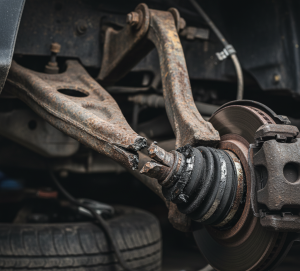
No.
The drive shaft transfers engine power to the wheels. If it’s damaged, you’ll feel violent vibrations and hear loud noises under the car. Driving under these conditions can destroy your transmission or differential.
Pull over at once. In Perth, even a short freeway drive on a vibrating shaft can lead to total drivetrain failure. Call an auto mechanic immediately.
Can I drive with a damaged steering linkage (tie rod, axial rod)?
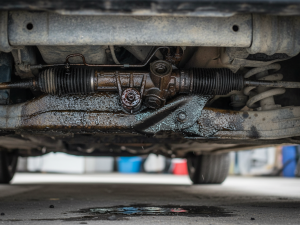
No.
Your steering linkage connects the steering wheel to the wheels. A broken linkage means you can’t reliably steer the car. It’s extremely dangerous as the car might not turn when you expect it.
Under no circumstances should you drive. Get it fixed before going any distance. In Perth, an undetected steering failure could cause an accident on busy roads.
Can I drive with failed power steering?
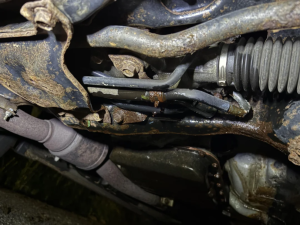
Yes, but with great difficulty.
If your power steering system fails, your steering will suddenly become very stiff. You can still move the car, but turning will take much more effort, especially at low speeds.
Drive slowly (parking-lot speed) if you must, and avoid long trips. In Perth’s hot weather, fluid loss can trigger failure; if it happens, find parking and have the fluid replenished or system serviced ASAP.
What to Do When Your Car Suspension Fails While Driving
If a suspension part breaks while you’re on the road, play it safe. Follow the immediate steps below:
- Brake gently and pull over:
Ease off the accelerator and brake gradually. Don’t make sudden swerves or hard stops that could throw the car off balance. Any abrupt change in handling should prompt you to play it safe and pull over to inspect. Signal and steer carefully to the side of the road or a shoulder.
- Activate hazard lights:
Turn on your flashers to warn other drivers while you slow down and stop.
- Inspect from a safe spot:
Once stopped, don’t jump out into traffic. From a distance, check for obvious damage. Look under the wheel wells for leaking oil or bent components, check if any tyres are flat or rubbing the body, and note if the car is sitting crooked. Take photos of visible damage using your phone. This helps mechanics diagnose the issue later.
- Call for professional help:
If you see the wheel rubbing, hear grinding, or feel the steering is very odd, do not drive any further. Contact a mobile mechanic for an on-the-spot check, or call roadside assistance/tow service. Only continue driving very slowly if the car still rolls straight and you have no better option to reach a safe location. Otherwise, arrange a tow. It’s far safer to get expert help than risk an accident.
How Long Can I Drive with A Broken Suspension?
There’s no universal safe limit. If the damage is extremely minor (for example, a barely-cracked spring or a shock leaking slightly), you might manage a very short, low-speed trip to a nearby shop; just a few minutes or a couple of kilometers.
Driving slowly and carefully over short distances can sometimes be done if absolutely needed. But any serious symptom (wheels rubbing, steering giving out, loud grinding or knocking) means stop immediately.
Because driving even a short distance on a known failure can void your insurance and might be illegal.
Bottom line: When in doubt, don’t risk it. Tow the car or have it towed. Safety comes first.
Hearing clunks, feeling uneven rides, or worried your suspension might give out on Perth roads?
Don’t wait for a breakdown.
Get Your Damaged Car Suspension Checked by Perth’s Trusted Mechanics – Schon Automotive
A cracked suspension arm, broken spring or leaking shock absorber can turn a small issue into a costly repair, or worse, a dangerous situation on the road.
At Schon Automotive, our expert Perth mechanics are ready to help. We offer fast inspections and reliable suspension repairs that follow your manufacturer’s guidelines. We’ll accurately diagnose your suspension issue and fix it correctly the first time, keeping your car safe and smooth. All makes and models are welcome at our Kenwick workshop; we’ve got the latest diagnostic tools and decades of experience.
Don’t let suspension damage leave you stranded!
Book Your Car Suspension Inspection Now
FAQs
Q: What is car suspension and why is it important?
The suspension system connects a vehicle’s wheels to its body. It includes springs (coil or leaf), shock absorbers (dampers), struts, control arms, anti-roll (sway) bars and bushings. It cushions the ride and keeps wheels in contact with the road. Good suspension absorbs bumps and maintains traction. If any part breaks, the ride becomes very rough and the car can become hard to steer or stop safely.
Q: What are common signs of a damaged suspension?
Look for: unusual bouncing or nose-dipping when braking, clunking sounds over bumps, uneven tire wear, sagging on one corner, or fluid leaks on shocks/struts. A broken shock in particular will let the car bounce repeatedly after every bump. If your car rocks side to side after pressing down on a corner, or pulls to one side, the suspension likely needs attention.
Q: Is it illegal to drive with a broken suspension in Perth?
Vehicle safety laws require your car to be roadworthy. Knowingly driving on a broken suspension is illegal and will almost certainly void insurance in the event of an accident. It’s always best to repair suspension damage before driving. Don’t risk fines or invalidating your coverage.
Q: How can I test if my shock absorbers are worn?
Try the bounce test: park on level ground and push down hard on one corner of the car. Then release. If the car bounces more than once or twice, that shock absorber (damper) is probably worn out. Also inspect shocks for oil leaks or dents. Worn shocks let the car continue oscillating, whereas a good shock should stop the bounce quickly.
Q: How often should I have my car suspension checked?
It’s a good idea to inspect suspension parts at every major service (around every 50,000 km) or if you notice any symptoms. Always re-check after hitting a big pothole or curb.
Q: Do I need to replace suspension parts in pairs?
Generally, yes, especially on the same axle. Replacing both front shocks or both rear springs together helps keep the vehicle balanced. If only one part has failed (say one shock absorber), you can drive very slowly to a shop, but you should plan to replace its partner soon to ensure even handling and wear.