
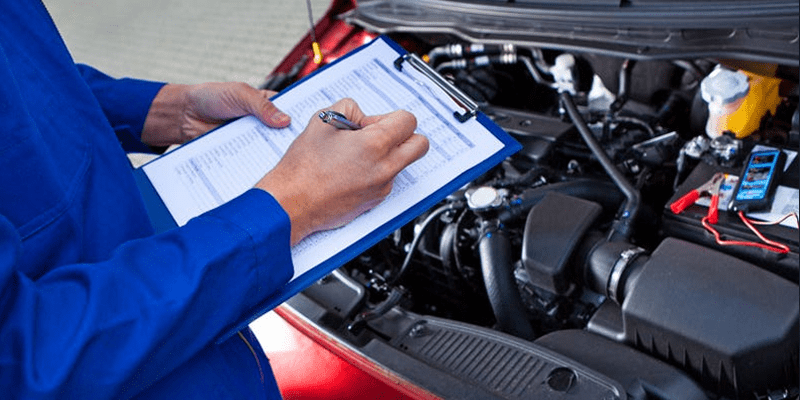
Ever dropped your car off at the mechanic and wondered what actually happens during a car service – and what you’re really paying for?
You’re not alone. Many drivers across Australia hand over their keys without fully understanding what a car service includes, how long it takes, or how much it should cost.
That confusion often leads to unnecessary repairs, skipped maintenance, or surprise bills.
The truth is, regular car servicing is one of the most important things you can do to keep your vehicle safe, reliable, and fuel-efficient. A properly maintained car not only performs better but also lasts longer and holds its resale value.
In this expert guide, we’ll walk you through everything you need to know about car servicing in Australia. By the end, you’ll know exactly what to expect from your next auto service and how to keep your vehicle running smoothly for years to come.
Let’s start with the basics.
What Is a Car Service?
A car service is a routine inspection and maintenance process designed to keep your vehicle running safely, efficiently, and reliably.
During a service, qualified mechanics check essential components such as the engine, brakes, tyres, battery, suspension, and fluids to ensure everything is working as it should. In simple terms, car servicing is preventative maintenance. Instead of waiting for something to break, mechanics inspect and maintain key systems to detect early signs of wear before they turn into expensive repairs.
During a typical car service, technicians follow a structured inspection checklist that may include:
- Changing engine oil and replacing the oil filter
- Checking and topping up essential fluids (coolant, brake fluid, washer fluid, transmission fluid)
- Inspecting brake pads, discs, and braking performance
- Checking tyres for pressure, wear, and safety
- Testing battery health and electrical systems
- Inspecting suspension and steering components
- Running diagnostic scans on the vehicle’s onboard computer
Modern vehicles rely heavily on electronics, so many workshops now perform ECU diagnostic scans to identify hidden issues that may not yet trigger warning lights.
Regular servicing is essential because it helps:
- Extend the lifespan of your engine and major components
- Improve fuel efficiency
- Maintain your vehicle’s resale value
- Reduce the risk of breakdowns
- Keep you and other road users safe
In short, servicing keeps your car reliable and prevents small issues from turning into costly repairs.
However, not all services are the same. Mechanics generally perform different levels of servicing depending on your vehicle’s age, kilometres travelled, and manufacturer recommendations. Let’s look at the main types of car service and what each one includes.
Types of Car Service in Australia
In Australia, most vehicles follow three main types of servicing: minor service, major service, and logbook service. Each service level involves a different depth of inspection and maintenance, depending on your car’s mileage and manufacturer schedule.
Understanding the difference between these services helps you know what does a car service include and when your vehicle might need a more detailed inspection.
Minor Service (Basic Car Maintenance)
A minor car service is the most common type of vehicle maintenance and focuses on essential safety checks and fluid replacements.
Most manufacturers recommend a minor service every 10,000–15,000 kilometres or every 6–12 months, whichever comes first. This service helps keep your vehicle running smoothly. Plus, catching small problems before they escalate.
A minor car service usually includes:
- Engine oil change
- Oil filter replacement
- Fluid level checks and top-ups (coolant, brake fluid, washer fluid, power steering fluid)
- Tyre pressure check and tyre condition inspection
- Brake system check
- Battery test and inspection
- Lights, indicators, and electrical system check
- General safety inspection
Although a minor service is relatively quick, it plays a crucial role in maintaining engine performance, fuel efficiency, and overall reliability.
Major Service (Comprehensive Vehicle Inspection)
A major car service is a much more thorough inspection that includes deeper maintenance and replacement of key components.
Major servicing is typically recommended every 30,000–45,000 kilometres, although the exact interval depends on the vehicle manufacturer.
In addition to everything included in a minor service, a major service often includes:
- Replacement of spark plugs
- Air filter replacement
- Cabin filter replacement
- Brake fluid flush or replacement
- Detailed suspension and steering inspection
- Fuel system inspection
- Comprehensive ECU diagnostic scan
- Inspection of belts, hoses, and cooling system
Because more components are inspected and replaced, a major service provides a complete health check for your vehicle. This type of servicing is essential for preventing major mechanical failures and maintaining long-term vehicle reliability.
Logbook Service (Manufacturer-Scheduled Servicing)
A logbook service follows the exact maintenance schedule set by your car’s manufacturer, done roughly every 10,000 kms or 12 months.
Every new vehicle comes with a logbook service schedule that specifies what checks and part replacements should occur at specific kilometre intervals. Logbook servicing is particularly important for newer vehicles still under warranty.
A proper logbook service:
- Follows the manufacturer’s recommended service checklist
- Uses approved parts and fluids
- Records each completed service in the vehicle logbook
- Helps maintain the manufacturer warranty
- Ensures the car performs according to factory standards
Many drivers believe they must return to the dealership for logbook servicing, but in Australia any qualified mechanic can perform a logbook service as long as manufacturer guidelines are followed.
Wondering what’s included in a car service when you take your vehicle to a mechanic?
Let’s break down the complete car servicing checklist used by professional workshops in Australia.
What Does a Basic Car Servicing Include?
A basic car service in Australia typically includes an engine oil and filter change, fluid top-ups, and safety inspections of the brakes, tyres, battery, lights, steering, and suspension. Many workshops also perform a diagnostic scan and a short road test to confirm that the vehicle is operating safely.
In simple terms, a basic service focuses on preventative maintenance. Instead of waiting until something fails, mechanics inspect the most important systems that affect safety, reliability, and performance.
Here are the key checks included in most basic car services.
Engine Oil and Oil Filter Replacement
Changing the engine oil and oil filter is the most important part of a basic car service. Engine oil lubricates moving engine components, reduces friction, and helps regulate temperature inside the engine. Over time, oil breaks down and becomes contaminated with dirt, carbon, and metal particles.
During a service, mechanics will:
- Drain the old engine oil
- Replace the oil filter
- Refill the engine with manufacturer-recommended oil
Fresh oil provides several important benefits:
- Reduces engine friction and internal wear
- Helps maintain smooth engine performance
- Improves fuel efficiency
- Prevents overheating and sludge buildup
Skipping regular oil changes can eventually lead to serious engine damage, which is why oil servicing is considered non-negotiable maintenance.
Fluid Checks and Top-Ups
Modern vehicles rely on several fluids to keep different systems functioning properly. During a car service, mechanics check fluid levels and top them up if needed.
Common fluids inspected include:
- Brake fluid – ensures braking systems operate safely
- Engine coolant – prevents overheating and maintains engine temperature
- Transmission fluid – supports smooth gear shifting
- Power steering fluid – allows easier steering control
- Windscreen washer fluid – improves driver visibility
Low or contaminated fluids can lead to mechanical failures, overheating, or reduced vehicle performance. Regular fluid inspections ensure your vehicle continues running smoothly, safely, and efficiently.
Brake System Inspection
Your braking system is one of the most critical safety components in your vehicle. During a car service, mechanics perform a detailed inspection of the braking system, including:
- Checking brake pads and discs for wear
- Inspecting brake lines and hoses for leaks
- Assessing brake fluid condition and levels
- Listening for noise or vibration during braking
Worn brake components reduce stopping power and increase accident risk. Early detection allows worn pads or discs to be replaced before they cause further damage. If you notice squeaking brakes, vibrations, or reduced stopping performance, servicing your car promptly is essential.
Suspension and Steering Inspection
The suspension and steering systems control how your vehicle handles on the road. If these components wear out, your vehicle may feel unstable or difficult to control.
During this inspection, mechanics typically check:
- Shock absorbers and struts
- Ball joints and control arms
- Steering linkages and rack components
- Signs of uneven tyre wear or misalignment
Faulty suspension can lead to poor ride comfort, reduced vehicle control, faster tyre wear, and unsafe handling at higher speeds. Identifying these issues early helps maintain a smooth, stable, and safe driving experience.
Tyre Inspection and Rotation
Tyres are the only contact point between your vehicle and the road, making them essential for safety. During a service, mechanics will inspect:
- Tyre tread depth to ensure legal compliance
- Tyre pressure for optimal fuel efficiency and safety
- Signs of uneven wear or damage
- Punctures, cracks, or sidewall damage
Some workshops may also perform tyre rotation, which helps distribute wear evenly and extend tyre lifespan. Maintaining proper tyre condition improves road grip, braking performance, fuel efficiency, and overall driving safety.
Battery Health Test
A weak or failing battery is one of the most common causes of vehicle breakdowns. During a battery test, mechanics check:
- Battery voltage and charging capacity
- Corrosion on battery terminals
- Connection tightness and wiring condition
Most car batteries last between 3–5 years, but extreme heat can shorten battery life. In cities like Perth, high summer temperatures can accelerate battery wear. Routine testing helps identify weak batteries before they fail unexpectedly.
Lights and Indicator Inspection
Vehicle lighting systems are essential for both visibility and road safety. A car service typically includes testing:
- Headlights and high beams
- Brake lights
- Indicators and hazard lights
- Reverse lights
- Interior dashboard warning lights
Technicians may also adjust headlight alignment to ensure proper illumination at night. Faulty lights can lead to traffic fines, failed road inspections, and increased accident risk, so they are always included in standard servicing checks.
Air Conditioning System Check
Air conditioning is not just about comfort; it also plays a role in driver alertness and cabin air quality.
During a service, mechanics may inspect:
- Airflow performance
- Cabin air filter condition
- Refrigerant pressure levels
- Cooling system operation
In warm regions like Western Australia, air conditioning systems work harder during summer months. Regular checks ensure the system continues delivering cool, clean air throughout the year.
Engine Diagnostics and ECU Scan
Modern vehicles rely on electronic control units (ECUs) that monitor engine performance, fuel systems, emissions, and safety systems. During servicing, mechanics often run a diagnostic scan using specialised tools. This scan can:
- Detect stored fault codes
- Identify early signs of engine or sensor issues
- Diagnose fuel or performance problems
- Detect hidden problems before warning lights appear
Even if the dashboard shows no warning lights, diagnostic scans can uncover potential issues early. This helps prevent more serious repairs later.
Road Test and Service Report
Once all inspections are complete, many workshops perform a short road test. During this test, mechanics check:
- Engine performance
- Braking response
- Steering alignment
- Suspension comfort
- Unusual noises or vibrations
Afterward, the technician usually provides a service report or checklist, outlining completed maintenance tasks, any issues detected, and recommended future repairs or servicing.
This final step ensures you leave the workshop with a clear understanding of your vehicle’s condition.
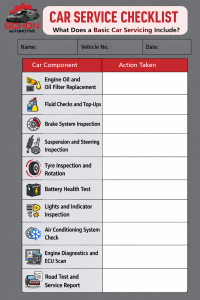
Quick Car Servicing Checklist
Here’s a handy overview of what’s in a full service via a quick snap shot.
How Long Does a Car Service Take?
A car service typically takes between 1 – 4 hours depending on the type of service and the condition of the vehicle.
Here is the general timeframe most workshops follow:
Car Service Type | Typical Duration |
Minor Service | 1–2 hours |
Major Service | 2–4 hours |
Logbook Service | 2–3 hours |
If technicians discover additional repairs such as worn brake pads, damaged belts, or suspension issues, the service may take longer.
How Much Does a Car Service Cost in Australia?
A full car service cost in Australia typically ranges from about $150 for a basic minor service up to $800+ for a major or dealer-level job, with most minor/logbook services averaging roughly $220–$385 depending on the workshop, vehicle and location.
For a transparent local option, Schon Automotive offers minor/logbook servicing from $149 (price varies by vehicle).
Average car servicing costs:
- Minor service (basic): $150–$300 — oil, filter, fluid checks, safety inspection.
- Standard / full service: $300–$450 — more checks and replacement of common wear items.
- Logbook service: $250–$600 — follows manufacturer specs to protect warranty.
- Major service: $400–$800+ — spark plugs, belts, brake fluid flush, full diagnostics, more labour/parts.
Factors that affect car service costs:
- Vehicle make & model — luxury, European and some 4WDs cost more for parts and labour.
- Service level — minor vs major vs dealer logbook.
- Parts used — OEM (original) parts cost more than good-quality aftermarket or “fit-for-purpose” parts.
- Labour rates & location — metro workshops typically charge higher hourly labour than regional garages.
- Discoveries during service — unexpected worn parts or repairs will increase the bill (reputable shops will contact you with a quote before continuing).
Money-saving tips for affordable car servicing in Perth:
- Ask for a written quote that lists parts and labour.
- Confirm whether the workshop uses OEM or fit-for-purpose parts (and the warranty on those parts).
- Compare independent mechanics vs dealers as independents can do logbook servicing to manufacturer standards at lower cost.
- Keep receipts and logbook entries for warranty proof.
How Often Should You Service Your Vehicle?
Service your car every 10,000–15,000 km or at least once every 6–12 months, whichever comes first. This is the common rule used by most manufacturers and Australian workshops. Some vehicles or severe driving conditions require more frequent checks (for example, every 6 months or 5,000–10,000 km).
Factors that change the recommended interval:
- Manufacturer schedule (the logbook is the single most important source). Always follow it to protect warranties.
- Driving style — lots of short trips, heavy city stop-start driving, frequent towing or heavy loads mean you should service more often.
- Mileage — high-mileage drivers may need minor checks every 5,000–10,000 km.
Feeling worried about surprise breakdowns or costly repairs in Perth?
Get Reliable Car Servicing in Perth at Schon Automotive – Logbook & Minor Services from $149
We offer Perth-wide logbook and minor servicing that protects your warranty, avoids surprise bills and gets you back on the road fast. Our experienced mechanics use modern diagnostics, provide a clear written safety report, and call you before any extra work.
We also offer coastal underbody checks for beachside cars and A/C checks before summer – all with transparent quotes and service records you can trust.
Book Car Service Now
FAQs
Q1: How do I know when my car needs a service?
Get your car serviced when your dashboard shows a service reminder, you’ve reached the recommended kilometres/time which is 10,000–15,000 km or 6–12 months, or you notice symptoms like warning lights, unusual noises, reduced performance, overheating or heavy smoke.
Q2: What does a minor car service include?
A basic service usually includes an engine oil and oil filter change, multi-point fluid checks and top-ups, brake check, tyre pressure/tread inspection, battery test, lights check, and a short road test.
Q3: What’s the difference between a minor and a major service?
A minor service handles essential maintenance like oil, filters, safety checks, while a major service adds component replacements and deeper inspections like spark plugs, air/cabin filters, brake fluid flush, suspension and full diagnostics.
Q4: Can an independent mechanic do my logbook service without voiding warranty?
Yes. In Australia you can use any qualified mechanic for logbook servicing as long as the service follows the manufacturer’s requirements and the work is recorded in the logbook.
Q5: Will regular servicing improve my fuel economy?
Yes. Regular maintenance including clean air filters, fresh oil, correct tyre pressure and properly tuned engine systems, often improves fuel efficiency and can reduce running costs.
Q6: Is it OK to skip a service if my car feels fine?
No. Many faults like oil sludge, brake corrosion, failing sensors develop silently. And they only show up once they cause bigger damage. Skipping services risks higher repair bills, potential safety issues and may affect resale value and warranty claims.