
Engine Oil Leak? How to Identify and Fix Oil Leaks in Your Car
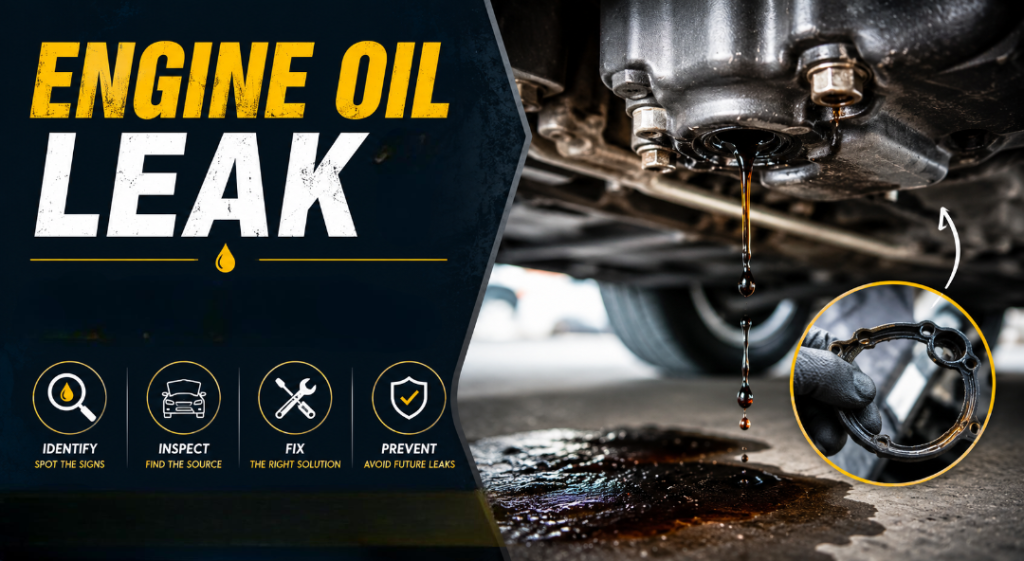
You walk out to your car and spot a dark stain on the driveway. Just a few drops of oil, easy to brush off, right? Not quite.
Engine oil leaks are one of the most common issues. Perth mechanics deal with, and one of the most frequently ignored. That oil stain underneath your car could be an early warning sign of a worn gasket, failing seal, or another engine problem. Catching it early is the difference between a quick fix and a costly engine repair.
In this guide, you’ll learn how to identify an oil leak in your car, what causes it, whether it’s safe to keep driving, how to fix it, and what you can expect to pay for repairs in Perth.
So, keep reading to get everything you need to act fast and smart.
What Is an Engine Oil Leak?
Engine oil lubricates every moving part inside your engine, from the pistons to the crankshaft. It helps reduce friction, regulate heat, and protect components from premature wear.
Your engine is a sealed system. Gaskets, seals, and precision-fitted components keep oil contained. When any of this fails due to age, heat, or damage, oil escapes. That’s an engine oil leak.
Leaks can be external (dripping oil under your car) or internal (oil burning in the combustion chamber and exiting through the exhaust as blue smoke). Both are serious. And both get worse without intervention. Even a slow drip is a warning. It will not resolve on its own.
Now let’s look at how to recognise one early.
How to Tell If Your Car Has an Engine Oil Leak – 7 Warning Signs
Below are the most common signs that your car engine oil is leaking.
1. Dark Spots or Puddles Under Your Parked Car
Consistently finding dark stains in the same spot under your car is a clear sign of an auto oil leak. Fresh oil looks amber and shiny; old oil is darker and thicker. The position of the spot, front, middle, or rear, can help narrow down the source.
2. Low Oil Warning Light on Your Dashboard
If this light activates while driving, your engine may already be critically low. Pull over safely, check the dipstick, top up if needed, and book a mechanic the same day.
3. Burning Oil Smell
A sharp, acrid smell (especially after the engine warms up) usually means oil is dripping onto a hot engine or exhaust component. It’s not just unpleasant; left unchecked, it’s a genuine fire risk.
4. Blue or Grey Smoke from the Exhaust
A brief puff on a cold morning is normal condensation. Persistent blue or grey smoke while driving points to an internal oil leak; oil entering the combustion chamber and burning with the fuel.
5. Visible Oil Residue Around the Engine
Open the bonnet and inspect the top and sides of the engine. Oily, crusty build-up around the valve cover, oil filter housing, or engine block is a reliable sign of an external leak.
6. Engine Running Hotter Than Normal
Oil helps regulate engine temperature. When levels drop due to a leak, friction increases and your engine runs hotter than it should. A rising temperature gauge warrants investigation.
7. Dropping Oil Level Between Services
If you’re topping up oil more often than usual, either the oil is leaking out or being burnt internally. Neither is normal. Both need a mechanic’s attention.
What Does the Colour of the Leak Tell You?
Not every fluid under your car is engine oil. Here’s a quick reference to help you identify what you’re dealing with:
Leak Colour | Likely Source |
Dark brown or black | Engine oil (old or degraded) |
Light amber or honey | Engine oil (fresh) |
Bright green or orange | Coolant: a different problem entirely |
Reddish or pink | Transmission fluid or power steering fluid |
Clear, watery | Water condensation; usually harmless |
This matters because coolant and transmission leaks each require a completely different repair approach. Knowing what you’re looking at helps your mechanic diagnose faster.
What Causes an Engine Oil Leak? 8 Common Culprits
An engine oil leak occurs when oil escapes from a sealed engine component, such as a gasket, seal, or oil pan. It can range from a minor drip to a serious mechanical fault that causes permanent damage if left untreated.
Here are the most common causes of oil leaks in a car.
1. Worn or Cracked Valve Cover Gasket
The most frequent culprit in higher-mileage vehicles. This gasket seals the top of your engine and hardens or cracks over time. You’ll typically see oily residue across the top of the engine block.
2. Damaged Oil Pan Gasket
The oil pan sits at the bottom of your engine. Its gasket degrades over time and can crack from road debris impact, a common issue on Perth’s outer suburban roads and regional surfaces.
3. Failing Crankshaft or Camshaft Seals
These seals protect the rotating shafts at the front and rear of the engine. They wear with age and heat cycles. Perth’s consistently high summer temperatures accelerate deterioration, especially in vehicles used for long motorway commutes.
4. Rear Main Seal Deterioration
One of the more expensive leaks to fix. Accessing it requires separating the gearbox from the engine. Oil drips from the rear of the engine and can contaminate the clutch if left long enough.
5. Loose or Faulty Oil Filter
Mostly follows a DIY oil change. If the filter isn’t hand-tightened correctly or the old rubber gasket wasn’t fully removed, oil will seep from the housing. Simple to fix, easy to miss.
6. Oil Drain Plug Issues
A stripped drain plug thread or missing crush washer causes a steady drip from the oil pan after every oil change. Worsens over time if repeatedly over-tightened.
7. Cracked Oil Pan
Direct impact from road debris, rocks, or grounding the vehicle can crack the pan itself. More common in SUVs and 4WDs driven on gravel or unsealed WA roads.
8. Overfilled Engine Oil
Overfilling creates excess crankcase pressure, forcing oil past seals and gaskets that were otherwise perfectly healthy. Always check the dipstick and stay between the min and max markers.
Note: WA’s summer temperatures, regularly hitting 38–42°C, place extra thermal load on engine seals and gaskets. High-mileage vehicles used for long daily commutes are particularly prone to seal deterioration.
Is It Safe to Drive with an Engine Oil Leak?
Yes, it is generally safe to drive short distances, but it actually depends on how bad the leak is. A minor drip won’t destroy your engine overnight. But a significant or worsening leak can cause irreversible damage, like seized pistons, scored cylinder walls, and complete engine failure, within a short driving distance. Those repairs cost thousands.
Leak Severity | What You’ll Notice | Action Required |
Slow drip (a few drops) | Small spots after parking | Book a mechanic within a few days |
Moderate leak (steady drip) | Visible puddle; oil light may flicker | Drive minimally. Book same day |
Major leak (heavy flow) | Large puddle; oil warning on; engine noise | Do NOT drive. Call a mechanic now |
If your oil warning light activates while driving, pull over safely as soon as possible. Running an engine with critically low oil can cause damage that no repair can fully undo.
How to Find Where Your Engine Oil Is Leaking From
You don’t need to be a mechanic to narrow down the source. Follow these steps:
- Park on clean concrete overnight: light surfaces show the drip pattern clearly.
- Check the spot location in the morning: the front suggests the engine area; the rear suggests the rear main seal or transmission.
- Open the bonnet and inspect: look for greasy residue around the valve cover, oil filter housing, and the underside of the engine block.
- Wipe suspect areas with a clean rag, then drive briefly: recheck for fresh oil reappearance.
- Pull the dipstick: if oil is at or below the minimum, treat it as urgent.
- Note smells or warning lights: a burning smell with no visible puddle often means oil is landing on the exhaust.
If the source isn’t obvious or you’d rather not get under the car, Schon Automotive‘s mechanics use advanced diagnostic equipment to locate leaks quickly and accurately.
How to Fix an Engine Oil Leak
Minor DIY Fixes
A handful of causes can be addressed without professional help:
- Tighten a loose oil drain plug (confirm the thread isn’t stripped first)
- Replace a loose or incorrectly seated oil filter
- Top up oil to a safe level while arranging a workshop appointment
These are only suitable for the simplest causes.
Professional Engine Repair – The Right Call for Most Oil Leaks
For anything beyond a loose filter or plug, book a mechanic:
- Valve cover gasket: Accessible and relatively affordable; do it promptly
- Oil pan gasket: Requires draining the oil and dropping the pan
- Crankshaft or camshaft seal: Involves significant engine disassembly
- Rear main seal: Labour-intensive; gearbox must be removed
- Cracked oil pan: Requires full pan replacement if impact damage is severe
Some of these look deceptively straightforward. Attempting them without the right experience and tools leads to a second, larger repair bill.
At our Kenwick workshop, every job comes with a transparent, written quote before work begins — no surprises.
How Much Does Engine Oil Leak Repair Cost in Perth?
In Perth, costs to fix an oil leak typically range from $30 for a simple filter swap to over $1,200 for a rear main seal replacement on a complex engine. The main variable is labour time; accessing some seals and gaskets requires removing a significant amount of surrounding components.
Repair Type | Estimated Cost (Perth) |
Oil filter replacement | $30 – $80 |
Oil drain plug / crush washer | $20 – $60 |
Valve cover gasket | $150 – $400 |
$200 – $500 | |
Crankshaft or camshaft seal | $300 – $700+ |
Rear main seal | $500 – $1,200+ |
Costs vary by vehicle make, model, engine type, and parts availability. Always request a written quote before authorising any repair.
How to Prevent Engine Oil Leaks – Tips for Perth Drivers
Most engine oil leaks don’t happen overnight. They develop gradually, and regular maintenance is the single most effective way to catch them early.
- Stick to your logbook service schedule: seals, gaskets, and fluid levels are checked at every visit
- Use the correct oil grade: check your owner’s manual; the wrong viscosity adds unnecessary pressure on seals
- Don’t overfill: always verify with the dipstick and stay between the min. and max. markers
- Replace your oil filter at every oil change: not every second one
- Act on minor drips early: a $150 gasket repair today beats a $1,000+ engine repair later
- Get a pre-purchase inspection on used cars: oil leaks are among the most commonly hidden faults on high-mileage vehicles
Schon Automotive‘s logbook servicing from $149 includes a full fluid and seal inspection, catching problems before they turn expensive.
Spotted an Oil Stain? Don’t Wait Until the Damage Is Done.
Book Your Engine Oil Leak Repair in Perth at Schon Automotive – Fast, Honest, Upfront Pricing
Most oil leaks are completely fixable. What matters is acting before a small drip becomes a serious engine fault. At Schon Automotive, we diagnose oil leaks using advanced equipment, provide a clear written quote before we start, and carry out every repair to the highest standard.
No guesswork. No pressure. Just reliable repairs done right, from our workshop in Kenwick.
Call: 0410 108 867
Engine Oil Leak FAQs
What does an engine oil leak look like?
An engine oil leak typically appears as a dark brown or black stain or puddle under your parked car. Fresh oil looks light amber and shiny. Older oil is darker and thicker. Additionally, you can also find greasy residue build-up on engine components under the bonnet.
Can I drive with an engine oil leak?
Yes, you can buy it, depending on leak severity. A very slow drip may allow limited short-term driving. But a significant leak can cause irreversible engine damage quickly. If your oil warning light activates while driving, pull over immediately. Do not continue driving and contact a car mechanic ASAP.
How long does it take to fix an engine oil leak?
Simple repairs like an oil filter or drain plug take under 1 hour. Gasket replacements typically take 2 to 4 hours. A rear main seal replacement can take a full day.
Why is my car leaking oil but the oil level looks fine?
A very slow or intermittent leak may not cause an immediate level drop. But a normal reading doesn’t mean the problem is harmless. If left untreated, it will worsen. Have it inspected early to find the source before it becomes a larger issue.
How much does it cost to fix an oil leak in Perth?
Engine oil leak costs range from $30–$80 for a simple oil filter replacement to $1,200+ for a rear main seal on a complex engine. The final cost depends on the leak location, vehicle make and model, and labour time.
Can an engine oil leak cause a fire?
Yes. Oil dripping onto hot exhaust components; the manifold or catalytic converter, can ignite. This risk is highest with rear main seal and crankshaft seal leaks. That’s why it’s recommended not to leave even a moderate leak unattended.
Do oil stop-leak additives actually work?
They can slow a minor leak temporarily, but they’re not a permanent fix. Some additives cause seal swelling that creates new problems elsewhere. For a reliable, lasting repair, the source needs to be identified and properly fixed by a qualified mechanic in Perth.